The guide
5 best headphones for music listening
THE SHORT ANSWER
My pick for a quiet room is the Sennheiser HD 600. For the commute, I'd choose the Sony WH-1000XM6. The room you listen in matters as much as the music.
Your favorite song should not have to fight a train, a loud office, or a bad fit. The best headphones for music listening depend on where you press play.
I'd start with that choice, then think about sound. These five pairs cover quiet home listening, shared spaces, and travel. Each earns its place for a different reason.
Start with the room, then the sound
| Headphones | My reason to choose them |
|---|---|
| Sennheiser HD 600 | A quiet room, wired listening, and a focus on voices |
| Sony WH-1000XM6 | Travel, noise cancellation, and easy wireless use |
| HIFIMAN Edition XS | A large open-back planar design for a home setup |
| beyerdynamic DT 770 PRO X | A closed-back wired pair for a shared desk |
| Focal Bathys | Bluetooth and a direct USB-DAC mode in one pair |
I wouldn't use one ranking for a silent room and a packed train. Open-back headphones let sound pass through the earcups. That can be pleasant at home, but the music leaks out and room noise gets in.
Closed-back headphones keep more of that sound in. Active noise cancellation, often called ANC, goes further by reducing some outside noise. It's especially useful with steady travel noise. It doesn't erase every voice nearby.
1. Sennheiser HD 600: my quiet-room pick
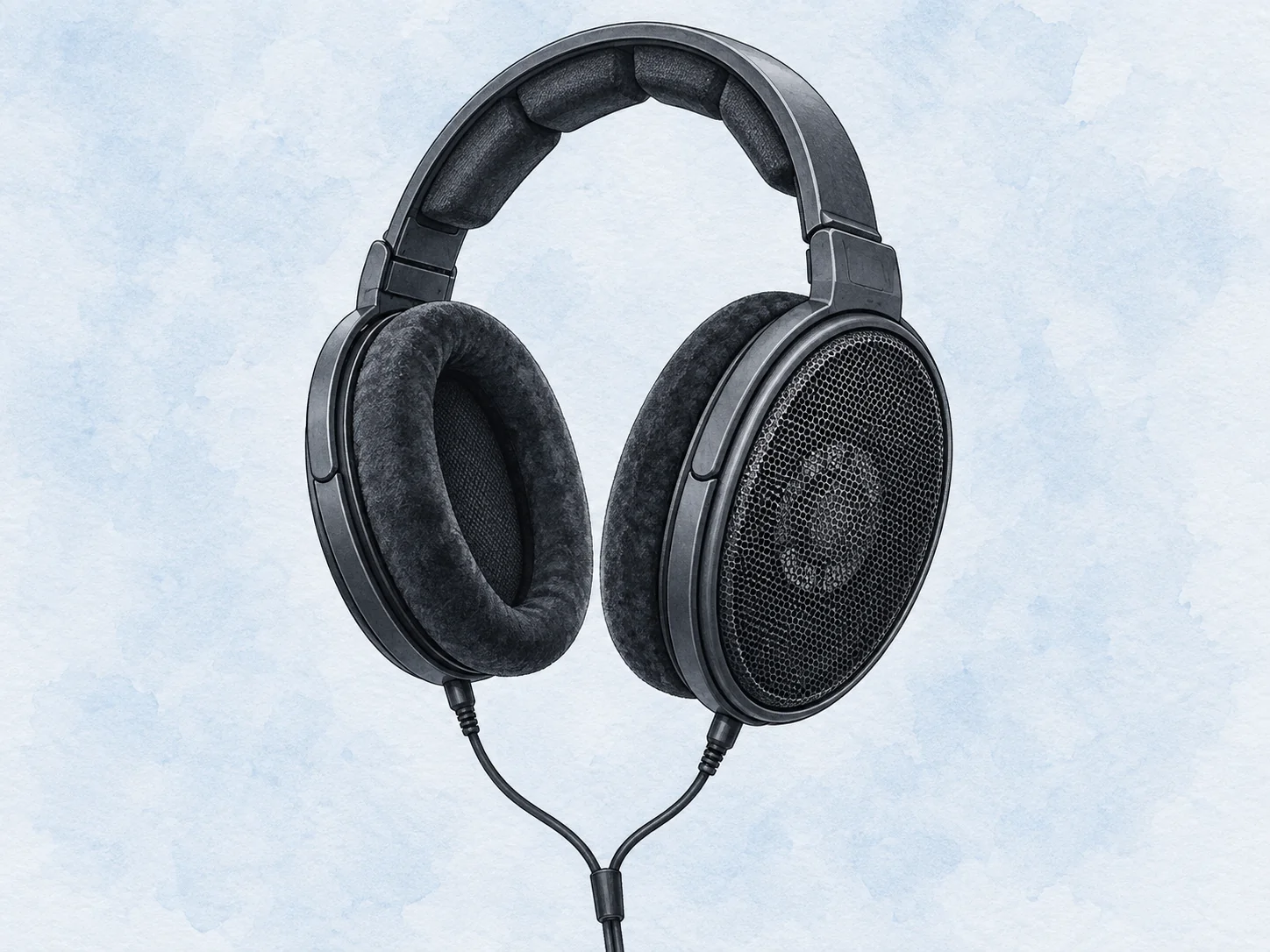
The Sennheiser HD 600 is the pair I'd choose for a quiet room and long albums. It's a wired, open-back design with a detachable cable. There's no battery to charge and no app you need just to hear your music.
Its appeal is a fairly direct one. You buy headphones for listening, without paying for wireless controls, travel modes, or microphones. The 3 m cable is useful at a desk or beside a stereo. It's long for a phone in your pocket.
In a discussion comparing the HD 600 and Edition XS, one owner of both preferred the HD 600's voices and midrange. The same owner favored the Edition XS for a wider sense of space and more bass. That's a listening preference, not a measured ranking.
The tradeoff: the HD 600 isn't my pick for heavy deep bass or a noisy room. Its open earcups offer little privacy. A person sitting nearby may hear what you play.
The rated impedance is 300 ohms. That doesn't mean you must buy an expensive amp. Check whether your source reaches the level you need without strain. Our headphone amp guide explains how to match the connections and power to your setup.
2. Sony WH-1000XM6: my travel pick
The Sony WH-1000XM6 is the pair I'd choose for a commute or frequent travel. Noise cancellation, Bluetooth, and a folding design solve problems that an open-back wired pair can't.
Sony's QN3 processor works with 12 microphones for the noise-control system. The Sound Connect app offers a 10-band equalizer. That gives you a way to change the balance of the music rather than live with one fixed sound.
I'd use that EQ with a light touch. If bass covers a voice, lower the bass first. If high notes feel sharp, make a small change and listen to a full song. Large boosts can make a short demo seem exciting while tiring you over an album.
The tradeoff: this is active gear that needs charging and has more settings than a wired pair. Its extra features are valuable on the move, but less essential in a quiet room.
The Sony help guide also makes clear that these headphones aren't waterproof. I'd keep them for travel and everyday listening, rather than treat them as gym or rain gear.
3. HIFIMAN Edition XS: for a home planar setup
The HIFIMAN Edition XS is the one I'd try if you want a large open-back planar headphone for home listening. It uses HIFIMAN's Stealth Magnets design and tall earcups that give it a very different shape from the HD 600.
Planar magnetic drivers use a thin diaphragm moved by magnets. Dynamic drivers, as used in the HD 600, use a different motor design. Neither type wins every comparison. The tuning and fit matter more than the driver label alone.
The Edition XS is listed at 405 g, with 18-ohm impedance and 92 dB sensitivity. Don't read that low ohm figure as a promise that any phone will drive it well. Power needs depend on sensitivity too.
The tradeoff: the size and weight are worth trying before you commit. In the same owner discussion linked above, some listeners liked its sound but found the fit awkward. One returned it over comfort. That's a useful reminder to give fit as much weight as detail and bass.
I'd choose it only for a setting where an open-back design makes sense. It's a poor answer to office noise. I wouldn't squeeze its large frame into a small daily bag either.
4. beyerdynamic DT 770 PRO X: wired sound for a shared desk
The DT 770 PRO X is my choice for someone who wants a wired pair but can't use open-back headphones. The closed earcups keep more sound contained, which makes them more practical at a shared desk.
This is the current DT 770 PRO X with the 48-ohm STELLAR.45 driver. It has velour ear pads and a detachable 3 m cable with a locking mini-XLR connector. A worn cable doesn't have to mean replacing the headphones.
I like the straightforward setup: plug in, set the volume, and listen. There's no battery or wireless pairing to manage. That's useful for a desk where the headphones stay within reach all day.
The tradeoff: closed-back doesn't mean soundproof. A seal helps, but you can still hear nearby noise. This pair has no active noise cancellation. I'd choose Sony for a busy commute and the beyerdynamic for a fixed wired setup.
Check the full model name. The PRO X label identifies this version and its detachable cable. Don't assume that a similarly named listing has the same parts.
5. Focal Bathys: Bluetooth with a useful USB mode
The Focal Bathys is the pair I'd consider when I want wireless use away from home and a direct USB connection at a desk. This is the original Bathys in Deep Black, with 40 mm aluminum/magnesium drivers.
It has Bluetooth, active noise cancellation, and a USB-DAC mode for PCM audio up to 24-bit/192 kHz. That USB mode is the clear reason to put it on this list. The headphones handle digital audio directly, without an extra box between them and the computer.
The supported format is a capability, not proof that every track will sound better. A good recording at normal streaming quality can still beat a poor one in a larger file.
The tradeoff: at 350 g, Bathys is a substantial travel pair. It also needs power in every mode, including when you use an analog cable. A dead battery doesn't turn it into ordinary passive headphones.
Focal rates Bluetooth listening with ANC at 30 hours. Treat that as the maker's figure, not a result for every volume and setting. I'd buy Bathys for its connection modes and a fit I had checked. The high-resolution badge alone wouldn't sell it to me.
Open-back or closed-back headphones?
For a quiet room
Open-back headphones are worth trying when you have space to yourself. You can hear the room, which may feel less shut in. But anyone nearby can hear some of your music too.
The HD 600 and Edition XS belong here. I wouldn't pay for either to fix a noisy workspace. The setting would work against the reason to choose them.
For a shared room
Closed-back headphones are the more practical starting point. The cups and pads create a barrier. How well that works depends on the fit, the pads, and what kind of noise is around you.
The DT 770 PRO X covers the wired route. Sony and Focal add active noise cancellation and wireless use. If you type while listening, our keyboard guide can help you avoid adding a loud click beside your music.
For a train or plane
I'd start with noise-canceling headphones. Reducing steady background noise can make music easier to hear without chasing it with the volume control. A compact case and a comfortable headband matter on a long trip.
Keep a charge plan as well as a music plan. A spare cable is useful only if the headphones support the mode you need. Check whether a wired connection still requires battery power.
Choose a sound you want to live with
Voices and the midrange
The midrange carries much of a voice, guitar, and piano. If those are the parts you care about most, listen to a few familiar songs with clear vocals. Can you follow the singer without turning the volume up?
I'd start with the HD 600 for that kind of quiet-home listening. The owner reports give a reason to try it, but your taste is the deciding factor. A sound described as balanced isn't the same as a sound everyone will love.
Bass and deep bass
Bass can add body and drive. Too much can cover the rest of the song. Deep bass is the low rumble below much of the punch of a kick drum. Those are related parts of the sound, but they aren't identical.
If bass is your priority, use a track where you know both the bass line and the voice. Listen for the notes, not just a large thump. A closed seal, the headphone's tuning, and EQ can all affect what you hear.
High notes and detail
A brighter sound can make small noises stand out. That isn't always the same as more useful detail. If cymbals or certain voices feel sharp, don't assume you need to learn to like them.
Try a longer session at a modest level. The sound that wins a quick comparison may not be the one you want for a whole evening. I'd favor easy listening over a dramatic first minute.
Space and soundstage
Soundstage describes the sense of where sounds sit around you. Some headphones feel more spread out; others put the singer closer. It's a listening impression, and the recording changes it too.
Don't treat the widest stage as the best result for every song. An intimate voice can be the point. Choose the presentation you prefer across several recordings.
Comfort can settle the choice
I'd keep a new pair on long enough to notice pressure points. A headband may feel fine for five minutes and less kind after an hour. Weight, pad shape, clamp, and the size of the cups all matter.
If you wear glasses, try the headphones with them. The arms can change the seal or create a sore spot. Move your head as you normally would. A pair that slips when you look down isn't a good fit just because it sounds nice.
Check replacement pads and cables before you buy. Pads wear and can change the fit. With wired headphones, a replaceable cable can be a useful long-term feature. With active wireless headphones, battery age is another part of ownership.
I'd use a seller with clear return terms for any costly pair. You're buying something that sits on your head, not just a list of audio specs.
Wired, Bluetooth, or USB?
Wired passive headphones keep the signal path simple. They need a source with a suitable headphone output, but not an internal battery. They also leave a cable between you and that source.
Bluetooth makes moving around easier. The source and headphones must support the same codec to use it. A long codec list on the box doesn't mean every phone will use every mode.
USB audio is a third route. Bathys can take digital sound directly in USB-DAC mode. A USB socket on other headphones may only handle charging. Check its stated job rather than the shape of the port.
For a desk, I'd choose the connection that stays out of the way. If your headphones need a separate amp, leave space for it near the source. For travel, I'd put easy pairing and packing ahead of extra boxes.
How I'd judge sound quality
A short shop demo can reward an exciting sound. Long listening sessions ask a different question: do you still want to hear this pair after the first song? The best headphones for you should pass both checks.
I'd use a small group of tracks I know well. Keep the volume modest and close between pairs. A louder pair can seem more lively even when the sound signature isn't a better fit. Don't let a volume jump make the choice for you.
Start with a voice and a few instruments. Then try a dense chorus, a track with low bass, and a quiet passage. This gives you a better sense of how the headphones handle changes in the music. It also makes vague words in a headphone review easier to judge.
A balanced sound doesn't need to feel dull. To me, it means the parts of a song sit in a useful relation to each other. Bass should have weight without burying the singer. Higher frequencies should let you hear texture without turning every cymbal into a sharp hiss.
Detailed sound is useful when it helps you follow a bass line or hear two voices apart. It's less useful if a bright treble response keeps pulling you away from the song. Clear mids can matter more than a dramatic sense of sparkle.
Headphones don't have to be perfectly flat to give you listening pleasure. Your ears, fit, and taste shape the result. An airy sound or a wider soundstage may be fun, but neither is a score that every pair must chase.
For critical listening, turn off extra effects at first. Hear the stock sound profile, then try EQ or spatial modes one at a time. That keeps a change in the headphone's tuning separate from a change made by an app.
I'd also check at the low level I use while reading. Some headphones sound more appealing when turned up. The best headphones for long listening sessions should not tempt you to keep raising the volume just to enjoy a song.
Match the sound to the music you love
Music lovers don't need a separate pair for each genre. Still, the parts you enjoy can guide what you listen for. These are starting points, not rules about how a style should sound.
For hip hop and electronic music: listen to the low bass as well as the beat. Can you follow the notes, or do they blur into one thump? Bass response should have reach and control. More bass is a matter of taste, but it should not hide the words.
Try a hip hop track with both a deep synth line and a clear vocal. The upper bass gives body, while the lowest notes add rumble. A lift in one doesn't prove strong output in the other. An EQ control can help if you want extra bass, within the headphone's limits.
For rock and metal: use a busy chorus. Guitar, drums, and voice should each keep a place in the mix. A sharp treble response can make a dense track tiring. A sound signature with too much bass can make it feel crowded.
For pop and singer-songwriters: start with vocal clarity. The words should be easy to follow at a comfortable level. A nice balance between the voice and the beat is more useful than a spectacular bass hit that masks both.
For classical music and jazz: listen to quiet details and the sense of the room. A wider soundstage can suit a large ensemble. A close, direct sound can work well for a small group or a solo voice.
The HD 600 is where I'd start for voices in a quiet room. The Edition XS is worth trying if you prefer the more spread-out presentation reported by some owners. For hip hop on a train, I'd give noise canceling and a good seal priority over open-back design.
Try many genres if that's how you listen. Great headphones should suit your whole library well enough that you don't keep thinking about their limits. One bright, impressive demo track is a weak basis for an expensive pair.
Specs that matter after the first week
Frequency response: a listed range isn't a full map of the sound. Two headphones can quote a similar range and have quite different bass response, midrange, and treble. A response graph adds detail, but the test setup and fit still matter.
I wouldn't rank sound quality by which box prints the widest range. Look at the overall tuning and try familiar music. Very low frequencies on a spec sheet don't tell you how much bass you'll hear.
Build quality: check the joints, cable entry, and headband adjustment. A sturdy-feeling shell is welcome, but repair parts are useful too. Find out how to get new ear pads and whether the cable can be changed.
Build quality also has to suit the use. A large home pair can be fine on a stand. Bluetooth headphones that go into a bag need a case and joints you can fold as the maker directs. Treat the travel case as part of the purchase.
Battery life: read the mode beside the number. Noise canceling, codec choice, volume, and calls can all change battery life. Focal's stated 30 hours for Bathys refers to Bluetooth listening with ANC. It isn't a figure for every possible use.
Long battery life is handy, but charging habits matter too. I'd charge before a long trip and check the battery at the same time as the ticket. A cable in the bag won't help if you have no suitable power source.
For headphones used mainly at home, ask whether you need wireless connectivity at all. The HD 600 and DT 770 PRO X avoid battery life as a concern. Bathys offers a useful USB mode, but still needs power.
Ear cups and pads: check that your ears fit inside without rubbing. A deep cup on one head may still press on another person's ears. Glasses, hair, and pad wear can affect the seal and the sound profile.
For long listening sessions, I'd value a calm fit over a luxury finish. A heavy pair can distribute its weight well, but not everyone will like it. Keep comfort separate from claims about premium build quality.
Controls: try the actions you use often. A touch control may be convenient until you brush it while adjusting the fit. A physical button may be easier to find without looking. Check the manual for ways to change or disable gestures you dislike.
With Bluetooth headphones, also test switching between the devices you use. A feature that works on one phone may depend on a setting or app on another. Good everyday behavior is part of the value, even when it doesn't change the sound signature.
Are studio headphones the best choice for home?
Studio headphones serve a job. A closed pair can keep a backing track from leaking toward a microphone. An open pair can suit quiet editing. Neither label guarantees the best headphones for casual listening.
If you record at home, an audio interface may already have a useful headphone output. Check that connection before buying another box. Studio monitors play sound into the room, while headphones place the drivers close to your ears. They are different ways to hear a mix.
That's one reason audio professionals may use more than one listening system. You don't need to copy a whole studio to enjoy an album. A comfortable pair with a sound signature you like can be enough.
For music lovers who also make calls, remember that a passive music headphone may have no microphone. The headphone plug doesn't turn it into a headset. If meetings matter, include the mic setup in the total cost.
The best headphones for a shared desk can be quite different from the best headphones for critical listening alone at night. Choose for the job you do most often. You can add a second type later if a real need appears.
Questions that come up at checkout
Do more expensive headphones always sound better?
No. A higher price can buy materials, design work, noise controls, or brand appeal. It doesn't prove that the tuning will suit your music or ears. A cheaper pair with the right fit can be the one you use more.
Do all audiophile headphones need an amp?
No. Start with the source you have. If it reaches a comfortable level cleanly, you may already have enough. For harder-to-drive wired headphones, compare impedance and sensitivity rather than using one number alone.
Can noise-canceling headphones be good for music?
Yes. In a noisy setting, reducing the noise can matter more than small differences heard in a quiet room. At home, you may prefer the simpler wired route. Those are different needs, not two levels of musical taste.
What would I choose?
For a quiet room, I'd begin with the HD 600. For travel, the Sony WH-1000XM6 is my first stop. I'd try the Edition XS for a different open-back sound. The DT 770 PRO X suits a shared wired desk. Bathys makes sense when direct USB audio matters.
The best headphones for music listening should make you want to keep the album playing. Choose for the place you listen, check the fit, and let your own taste finish the job.